
Get My Payslips: How to Get Lost or Missing Payslips
Misplacing a payslip happens to almost everyone at some point — a moving house, a cleared-out inbox, or a payroll portal you haven't logged into in months. If you're trying to work out how to get my payslips back quickly, the good news is that there are several reliable routes, and in most cases you can get a copy without much hassle. This guide walks through every option, from your current employer's payroll system to HMRC's official records.
Note: If you urgently need your Payslips, P60, or P45 and can't wait for a standard replacement request through your employer or HMRC, we can help speed up the process. Visit: A2Z Payroll to get your documents emailed within 2 hours, A2Z Payroll is a trusted payroll service provider with over 20 years' experience, and they will provide you with verified original documents, never fabricated copies like some other online services offer.
Why You Might Need a Payslip Copy
Payslips aren't just a record of what you were paid — they're often required as proof of income for practical, everyday situations. Common reasons people need to retrieve a copy include:
- Applying for a mortgage, rental agreement, or personal loan
- Checking that tax and National Insurance deductions were correct
- Completing a self-assessment tax return
- Resolving a pay dispute or querying a bonus or overtime payment
- Applying for a visa or right-to-work documentation
What a Payslip Should Show
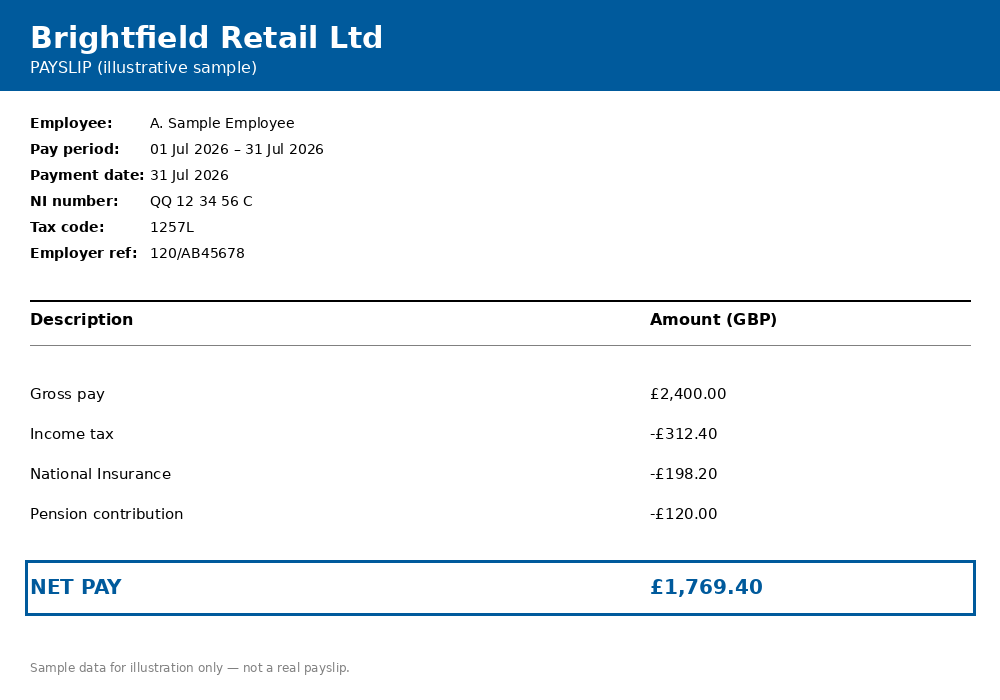
Under UK law, every payslip must include your gross pay, any deductions (such as tax, National Insurance, and pension contributions), and your net (take-home) pay. Below is an illustrative example of what a typical monthly payslip looks like.
How Can I Get My Payslips From My Current Employer?
If you're still employed by the company, this is almost always the quickest path. Most organisations now issue payslips digitally, but it's still common for people to lose track of login details or delete emails by mistake.
Step 1: Check Your Payroll Portal
Providers such as Sage, Xero, ADP, and BrightPay give employees a self-service login where past payslips are stored and downloadable as PDFs. If you can't remember your login, look for a "forgot password" link, or ask HR to resend your access details.
Step 2: Contact HR or Payroll Directly
If there's no portal, a short email to payroll or HR is usually enough. Ask them to resend the specific pay periods you need. Because employers are required to retain payroll records, this is normally a routine request they can fulfil within a few days.
Step 3: Check Your Email and Cloud Storage
Many payslips are emailed as PDF attachments each pay period. Searching your inbox for "payslip" or your employer's name, or checking a linked cloud storage folder, can save you a request altogether.
Tip for Weekly-Paid Roles
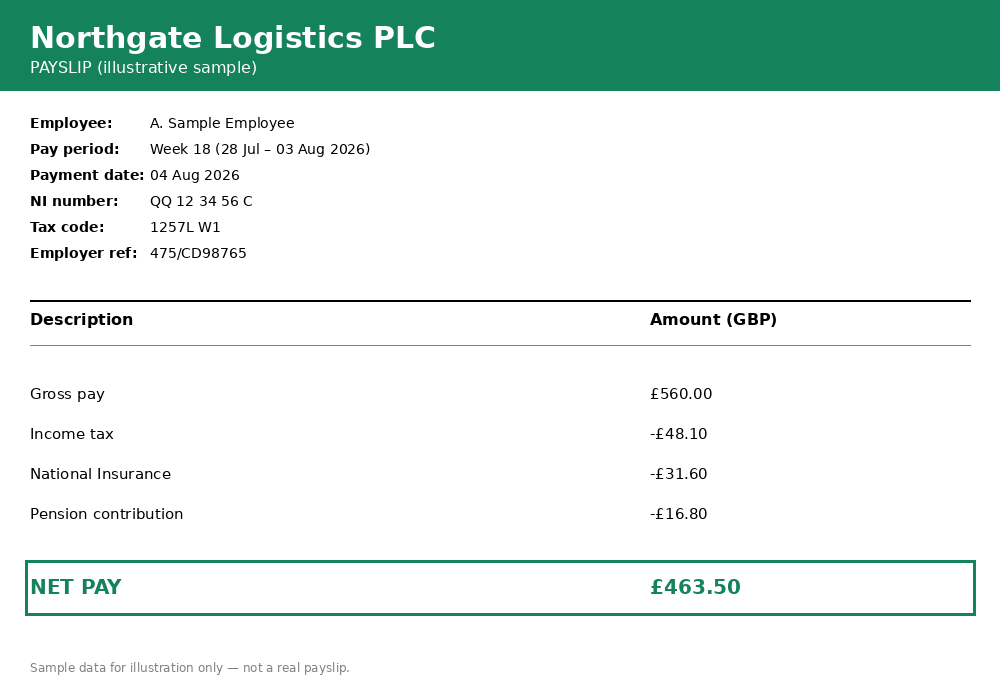
If you're paid weekly rather than monthly, payslip volume is higher, so it helps to save each one as it arrives rather than relying on retrieving a backlog later.
YMYL Disclaimer: This article is for informational purposes only and does not constitute professional tax or financial advice. Content reviewed by: Joyce Kim, CTA Chartered Tax Adviser — last updated 16 August 2026. Please consult a qualified tax adviser for your specific situation before making decisions based on this content.
Retrieving Payslips After Leaving a Job
Once you've left a company, you may still need old payslips for tax, mortgage, or reference purposes. Former employers are still obliged to keep your payroll records for a set period, so don't assume the information is gone just because you no longer work there.
Contacting a Former Employer
Email the HR or payroll department, provide your full name, employee number if you have it, and the dates you worked there. Most companies can locate archived payslip data even years after you've left.
If the Company No Longer Exists
This is where things get trickier — and it's exactly the situation where HMRC becomes the most useful resource, since employer PAYE submissions are retained on HMRC's systems independently of whether the business is still trading.
Can I Use HMRC to Get My Payslips or Income Records?
HMRC doesn't hold copies of the payslip documents themselves, but it does hold the underlying PAYE income data reported by every employer. This makes it a strong backup option when payroll departments are unreachable.
Your Personal Tax Account
Signing in to your HMRC personal tax account lets you view income and PAYE records for previous tax years, which can substitute for a missing payslip in many situations, including mortgage applications.
Requesting Employment History by Post or Phone
If you can't access your account online, HMRC can send your employment history and income figures by post. Details on how to do this are outlined on the official gov.uk payslips guidance page, which also explains your statutory rights around payslip content and frequency.
Why This Matters: Because HMRC's records come directly from employer submissions, they're considered reliable evidence even when the original paper or digital payslip has been lost for good.
Digital Payslips: Getting Copies Without Waiting on HR
An increasing number of UK employers use cloud payroll platforms that give staff permanent, on-demand access. If your employer uses one of these systems, you may never need to formally request a copy again.
Setting Up Ongoing Access
- Ask HR which payroll software the company uses
- Register for self-service access if you haven't already
- Enable email or app notifications for each new payslip
- Download and archive PDFs periodically as a personal backup
Note: A five-minute setup now can save you a much longer request later.
What to Do If You Need Proof of Income Urgently
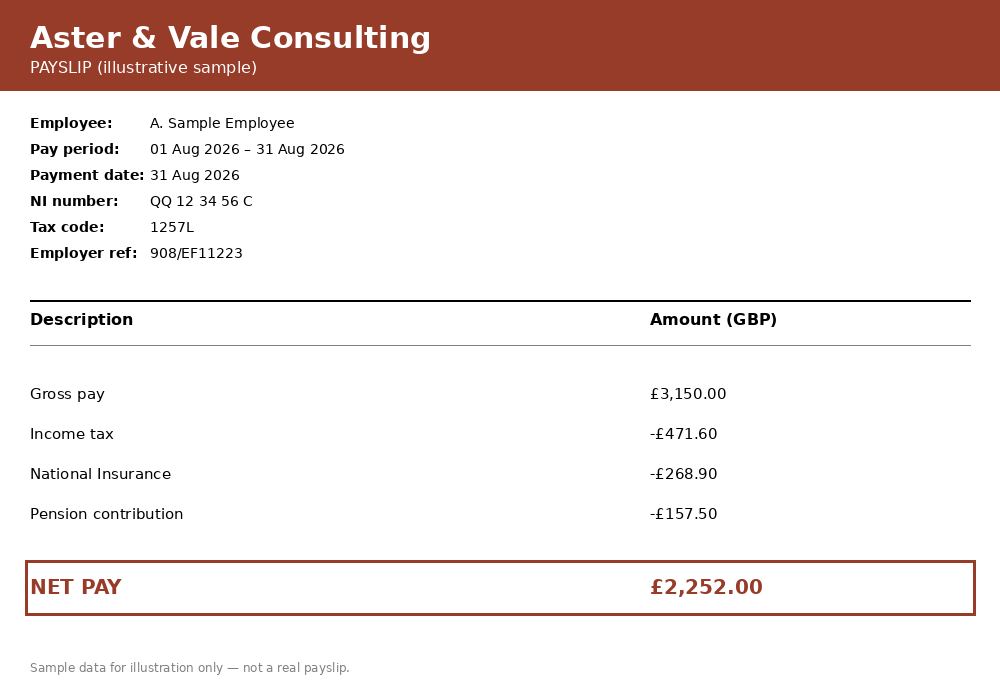
Sometimes a lender or letting agent needs proof of income within days. In that situation:
- Ask payroll for an emailed PDF rather than a posted copy — it's faster
- Offer to accept a P60 or bank statement showing salary deposits as an interim substitute
- Check your HMRC personal tax account, which usually updates faster than a manual employer request
Frequently Asked Questions
How do I get my payslips if I've lost them?
Start with your current or former employer's payroll or HR team, since UK employers must keep payroll records for at least three years. Many payroll systems also allow employees to log in and download copies themselves at any time.
Can HMRC give me copies of my payslips?
HMRC doesn't issue the payslip document itself, but it can share your employment history and income figures for past tax years, which works as evidence when the original isn't available.
What if my employer has closed down and I need old payslips?
Contact HMRC directly. Because employers submit PAYE data throughout the year, HMRC retains your income and employment history even after a company stops trading.
How long do employers have to keep payslip records?
UK employers are required to keep payroll records for a minimum of three years from the end of the relevant tax year, and many retain them for longer.
Can I use something other than the original payslip for a mortgage application?
Yes — reissued payslips, an HMRC employment history printout, or a P60 are all commonly accepted alternatives by lenders.
Conclusion
Whether you're chasing a single missing month or need several years of records, there's almost always a way to get my payslips again without starting from scratch. Begin with your employer's payroll system or HR team, and fall back on HMRC's employment history service if the company is no longer around. Setting up self-service payroll access now is the simplest way to avoid the same problem in future.
Note: This post complements our separate article covering Lost Payslips scenarios. If you're looking for Lost Payslips guidance, see our comprehensive Lost Payslips guide instead.